








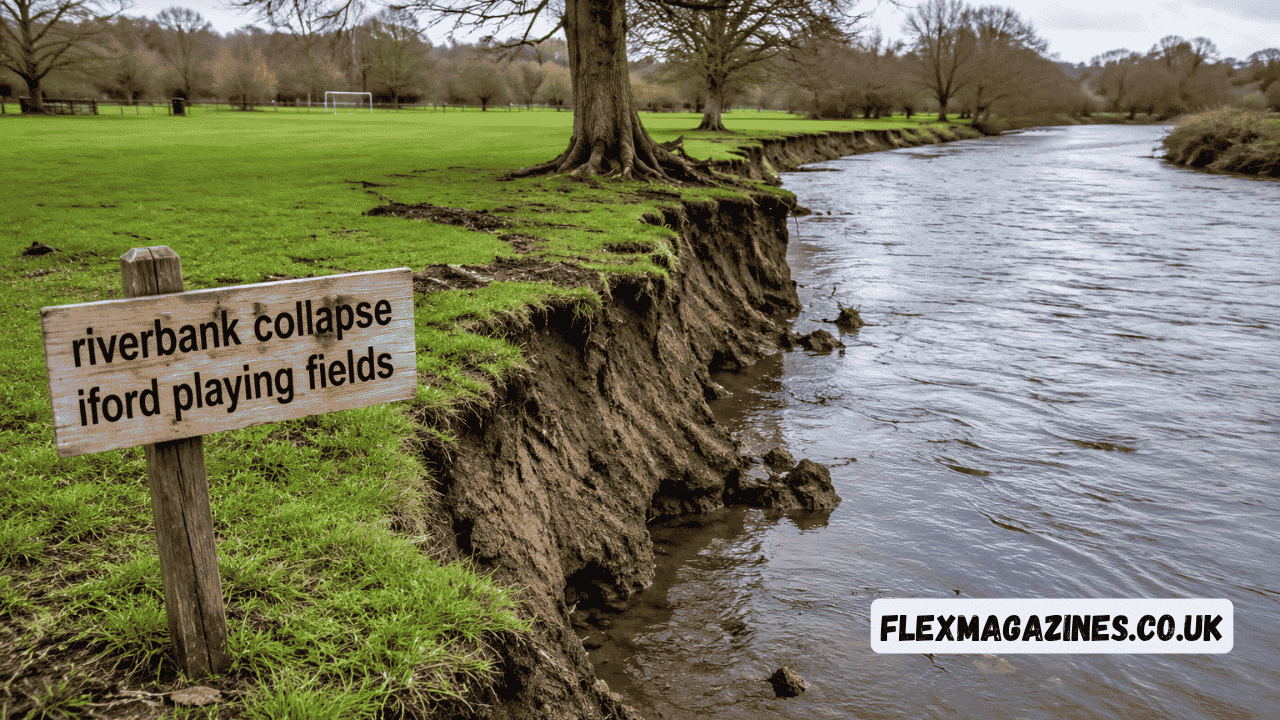
The area around Iford Playing Fields sits along a quiet stretch of the River Stour in Dorset, but the landscape behind its calm appearance has been under steady pressure for years. Repeated flooding, shifting river flow, and saturated ground conditions have made parts of the riverbank increasingly unstable. In recent discussions and observations, the issue of riverbank collapse iford playing fields has become a growing concern for both local users and those responsible for maintaining public land. What once looked like minor erosion has gradually turned into visible structural weakening of the banks in certain sections. This article explores why this is happening, the history behind it, and what it could mean for the future of the area.
Location and natural conditions shaping the riverbank
The River Stour near Iford flows through a low-lying floodplain that naturally collects excess water during heavy rainfall. This geography means the land is already prone to saturation, especially during long wet periods. When the soil becomes waterlogged, it loses strength and starts to break down under its own weight and the force of flowing water. Over time, this creates conditions where riverbank collapse iford playing fields becomes more likely during storms or high river levels. The surrounding fields and recreational areas sit close to this active river edge, which increases exposure.
The tidal influence from nearby Christchurch Harbour also plays a role in pushing water back up the river during high tide events. This slows drainage and increases pressure along the riverbanks. When river flow and tidal surge meet, the water level can rise quickly and remain elevated for extended periods. These combined forces weaken the soil structure, especially on outer bends where water flow is strongest. This is one of the key reasons why riverbank collapse iford playing fields has been repeatedly discussed in flood and erosion reports.
History of flooding and long-term pressure on the area
The River Stour has experienced several significant flood events over the past decades, with particularly severe flooding recorded during winter storms in 2013 and 2014. During those events, water levels rose far beyond normal thresholds, covering large parts of the floodplain around Iford. The ground remained saturated for long periods after the floods receded, which weakened riverbank stability. These repeated cycles of flooding and drying have contributed directly to riverbank collapse iford playing fields in certain vulnerable sections.
In later years, additional storm systems have continued to stress the same river corridor. Even when flooding does not reach extreme levels, frequent high-water conditions prevent the land from fully recovering. This slow degradation often goes unnoticed until sections of the bank begin to slump or crack. Localized erosion has become more visible in recent years, reinforcing concerns about riverbank collapse iford playing fields becoming more frequent if weather patterns continue as they are.
How erosion develops along the River Stour
Erosion is a natural process, but it becomes more aggressive when water flow increases or soil strength decreases. Along the River Stour, fast-moving water during heavy rainfall cuts into the base of riverbanks, gradually removing support from below. Once the lower structure weakens, the upper layers begin to collapse under gravity. This chain reaction is one of the main reasons riverbank collapse iford playing fields has been identified as a recurring risk area.
Several factors accelerate erosion in this location:
- Saturated soil from repeated rainfall
- Strong river currents during storms
- Tidal backflow from Christchurch Harbour
- Loss of vegetation holding soil together
- Footpath and field usage near the bank edge
Each of these elements contributes to gradual but continuous weakening of the river edge. Over time, small collapses can expand into larger sections of failure if no reinforcement or natural recovery occurs. This makes monitoring essential in areas like Iford where public land is close to active erosion zones.
Impact on playing fields and public safety
Iford Playing Fields are used for recreation, sports, and walking routes, which makes riverbank stability an important safety issue. When erosion progresses close to these areas, sections of land may become unsafe or require temporary restriction. The concern around riverbank collapse iford playing fields is not only about environmental change but also about public access and safety. In some cases, visible cracks or slumping ground can appear near paths, creating hazards for users.
The impact is not always immediate, but it builds over time. Reduced land stability can lead to uneven surfaces, loss of usable field space, and potential damage to nearby infrastructure. Maintenance teams often need to assess whether affected areas should be fenced off or reinforced. In this way, riverbank collapse iford playing fields directly influences how the space can be used by the community throughout the year.
Environmental pressure and changing weather patterns
In recent years, weather patterns in the region have become less predictable, with heavier rainfall concentrated into shorter periods. This increases the volume of water entering the River Stour in a short time, placing additional pressure on riverbanks. When combined with already weakened soil, this creates conditions where riverbank collapse iford playing fields becomes more likely after major storms. The cycle of intense rain followed by high river levels reduces the time the ground has to recover.
Warmer temperatures can also affect vegetation growth along the banks. While plants normally help stabilize soil, extreme conditions can weaken root systems or prevent consistent growth. Without strong vegetation cover, soil is more exposed to direct water impact. This contributes further to erosion and instability in vulnerable sections near Iford. Over time, these environmental changes increase the long-term risk profile of riverbank collapse iford playing fields.
Signs of riverbank instability in the area
Several visible indicators often appear before a full collapse occurs. These signs are important for early detection and response. In areas like Iford, monitoring these changes can help reduce damage and improve safety planning. The most common signs linked to riverbank collapse iford playing fields include:
- Small cracks forming along the river edge
- Sections of soil slipping into the water
- Exposed tree roots along the bank
- Uneven or sinking ground near footpaths
- Loss of grass or vegetation near the river edge
These indicators suggest that the soil structure is weakening and may fail under continued pressure. Early intervention can sometimes slow the process, but natural forces often continue working against stabilization efforts.
Maintenance challenges and long-term management
Managing riverbank stability in floodplain areas is difficult because the environment is constantly changing. Even when repairs are made, future storms or high-water events can undo progress quickly. This ongoing challenge is central to discussions about riverbank collapse iford playing fields and how to protect the area in the long term. Solutions often require repeated monitoring and adaptive strategies rather than one-time fixes.
Common approaches include reinforcing banks with natural barriers, improving drainage, and encouraging vegetation growth. However, these methods must be balanced with maintaining public access and preserving the natural character of the river. In many cases, management becomes a continuous process rather than a final solution. This is why riverbank collapse iford playing fields remains a topic of ongoing attention rather than a resolved issue.
Broader implications for the River Stour corridor
The situation at Iford reflects wider conditions along the River Stour, where multiple sections face similar erosion pressures. As water levels fluctuate more frequently, other nearby areas may experience comparable instability. The concern around riverbank collapse iford playing fields is part of a larger pattern affecting floodplain environments across the region. It highlights how interconnected river systems respond to both natural and human-influenced changes.
Understanding these patterns helps in planning future land use and flood protection strategies. It also emphasizes the importance of maintaining natural floodplains while ensuring safety for public spaces. The balance between access and protection will continue to shape how areas like Iford are managed in the coming years.
Conclusion
The issue of riverbank collapse iford playing fields is closely tied to the natural behavior of the River Stour and the environmental pressures acting on it. Flooding history, soil saturation, tidal influence, and changing weather patterns all combine to weaken riverbank stability over time. While erosion is a natural process, its increasing intensity in this area raises practical concerns for safety and land use. Continued monitoring and adaptive management remain essential to reduce risks and protect public spaces. As conditions evolve, understanding these underlying factors will be key to addressing future challenges along the river.
FAQs
What causes riverbank collapse iford playing fields?
It is mainly caused by erosion, flooding, saturated soil, and strong river currents that weaken the bank over time.
Is the area around Iford Playing Fields at high flood risk?
Yes, the River Stour floodplain makes the area naturally prone to flooding during heavy rainfall and storm events.
Can riverbank collapse be prevented completely?
Not entirely, but reinforcement, vegetation management, and drainage improvements can reduce the risk significantly.
Why does erosion happen faster in this location?
The combination of tidal influence, floodwater pressure, and soft soil makes the riverbank more vulnerable.
What are early warning signs of riverbank failure?
Cracks in the ground, slipping soil, exposed roots, and uneven surfaces near the river are common warning signs.