






The easyjet flight u24429 emergency incident drew attention across aviation watchers because of how quickly a routine European route turned into a full emergency diversion. The flight was operating from Lyon in France to Porto in Portugal when the situation unfolded shortly after takeoff. What should have been a standard short-haul journey turned into a return to departure airport under emergency conditions. Reports from aviation tracking and passenger accounts helped piece together the sequence of events. The case became widely discussed due to concerns around passenger behavior and cockpit security.
Overview of the easyjet flight u24429 emergency situation
The easyjet flight u24429 emergency began shortly after departure when the aircraft was climbing out of Lyon. The Airbus A320 was cruising at an early phase of the flight when the crew suddenly declared an emergency. Air traffic control was notified that the aircraft was squawking 7700, which signals a general emergency in aviation. The decision was made to turn the aircraft back toward Lyon instead of continuing to Porto. This quick response helped ensure the situation remained controlled and safe for everyone onboard.
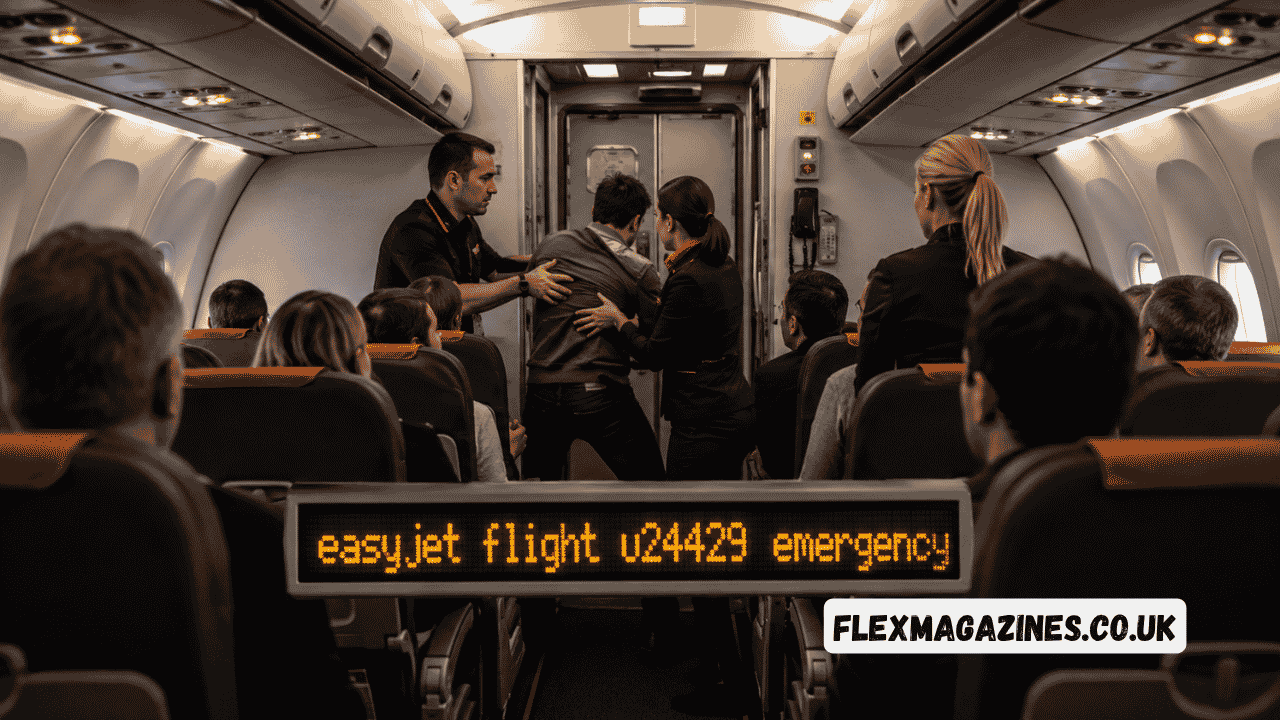
The easyjet flight u24429 emergency was primarily linked to a disruptive passenger incident. Reports indicated that a passenger attempted to move toward the cockpit area during flight, causing concern among crew members. The situation was treated as a potential security threat, which is why the pilot immediately initiated a return. Aviation safety procedures require strict action when cockpit access is at risk. The aircraft landed safely back in Lyon without any physical injuries reported.
Flight details and timeline of events
The easyjet flight u24429 emergency took place on a short European route that normally lasts around two hours. The aircraft involved was an Airbus A320, a common narrow-body jet used for regional flights. The flight had just reached cruising altitude when the situation escalated. Within minutes, the crew decided to divert back to Lyon instead of continuing forward. The return was executed smoothly under priority landing procedures.
Key timeline points of the easyjet flight u24429 emergency include:
- Departure from Lyon on a routine schedule to Porto
- Climb phase completed without initial issues
- Passenger disturbance reported shortly after takeoff
- Emergency code squawk 7700 activated
- Immediate return initiated to Lyon
- Safe landing with airport authorities on standby
The easyjet flight u24429 emergency was resolved within a short time frame, which helped avoid escalation. Emergency protocols in commercial aviation are designed exactly for situations like this. The crew followed standard safety procedures by prioritizing return and passenger control. Ground response teams were already prepared when the aircraft landed. This ensured a smooth handling of the situation once the plane touched down.
Passenger behavior and onboard disruption
The easyjet flight u24429 emergency was triggered by the behavior of a single passenger who reportedly showed signs of mental distress. According to available reports, the individual attempted to approach restricted areas of the aircraft. This created concern among cabin crew and nearby passengers. In aviation, any attempt to access the cockpit is treated as a serious security risk. The crew acted immediately to prevent escalation.
In the easyjet flight u24429 emergency, cabin staff worked quickly to restrain the situation without causing panic onboard. Other passengers were kept calm while safety procedures were implemented. The pilot decided that continuing the flight was not safe under the circumstances. Mental health-related incidents during flights are rare but taken extremely seriously. This case reflects how quickly crew response can determine the outcome.
Emergency declaration and squawk 7700 meaning
The easyjet flight u24429 emergency included the activation of squawk 7700, which is the universal transponder code for aircraft emergencies. When this code is set, air traffic control immediately gives priority handling to the aircraft. It signals that the crew requires urgent assistance or special handling. In this case, it helped clear airspace for a faster return to Lyon. The signal is standard across global aviation systems.
During the easyjet flight u24429 emergency, declaring squawk 7700 ensured that ground teams were ready before landing. Emergency vehicles were placed on standby as a precaution. Although the situation did not result in injuries, the procedure is always followed to eliminate risk. Pilots are trained to use this code whenever passenger safety or aircraft control is compromised. It is one of the most important emergency tools in aviation communication.
Landing and airport response in Lyon
The easyjet flight u24429 emergency concluded with a safe landing back in Lyon. The aircraft was guided in under priority conditions, allowing it to land without delay. Emergency response teams were present on the runway as part of standard protocol. Once the aircraft stopped, authorities boarded to assess the situation. The passenger involved was handed over to medical and security teams for evaluation.
In the easyjet flight u24429 emergency, airport staff ensured all passengers were safely disembarked. The situation was controlled without further disruption. Aircraft inspections were carried out after landing to confirm everything was stable. Operations at the airport continued normally shortly after the incident. The quick coordination between crew and ground staff played a key role in preventing escalation.
Aviation safety measures and cockpit protection
The easyjet flight u24429 emergency highlights how strict cockpit security measures are in modern aircraft. Commercial planes like the Airbus A320 have reinforced cockpit doors that remain locked during flight. Access is strictly controlled and monitored by the flight crew. Any attempt to breach this area is treated as a major threat. This system exists to prevent interference with flight operations.
Important safety measures relevant to the easyjet flight u24429 emergency include:
- Reinforced cockpit doors with restricted access
- Crew communication protocols for suspicious behavior
- Immediate emergency diversion procedures
- Coordination with air traffic control using emergency codes
- Rapid response from airport security teams
These systems worked as intended during the easyjet flight u24429 emergency. The crew followed established safety rules without hesitation. This is one reason commercial aviation remains one of the safest modes of transport. Every layer of protection is designed to handle unpredictable passenger behavior. The incident shows how training and procedures work together in real time.
Mental health and in-flight incidents
The easyjet flight u24429 emergency also brings attention to mental health challenges during air travel. While rare, certain passengers may experience acute episodes triggered by stress, medical conditions, or other factors. Cabin crew are trained to identify unusual behavior early. However, not all situations can be predicted before boarding. This makes in-flight response critical.
In the easyjet flight u24429 emergency, reports suggest the passenger may have been experiencing a severe psychological episode. Such cases are handled carefully to protect both the individual and other passengers. Airlines often rely on medical teams once the aircraft lands. These incidents underline the importance of balancing security and care. Aviation systems aim to respond safely without escalating harm.
Impact on passengers and flight operations
The easyjet flight u24429 emergency caused disruption for passengers onboard, but safety remained the top priority throughout. Travelers experienced a sudden return to Lyon, which meant delays in reaching Porto. However, most passengers were reportedly safe and unharmed. Airlines typically provide support or rebooking after such events. Operational schedules may also adjust depending on aircraft inspection.
For easyjet flight u24429 emergency situations like this, airlines focus on minimizing long-term disruption. Aircraft are checked before returning to service. Crew members also provide incident reports for investigation. While inconvenient, these measures ensure safety standards remain high. The system is designed to prioritize lives over schedules.
Conclusion
The easyjet flight u24429 emergency shows how quickly routine flights can change when unexpected passenger behavior occurs. The situation was handled efficiently through standard aviation emergency procedures. From the declaration of squawk 7700 to the safe landing in Lyon, every step followed established safety protocols. No injuries were reported, which reflects the effectiveness of the crew’s response. The event also highlights the importance of cockpit security and trained cabin staff in managing high-pressure situations. Overall, the incident was resolved without escalation and demonstrated the strength of modern aviation safety systems.
FAQs
What caused the easyjet flight u24429 emergency?
The easyjet flight u24429 emergency was triggered by a disruptive passenger behavior that raised safety concerns onboard.
Did the aircraft land safely after the easyjet flight u24429 emergency?
Yes, the aircraft returned to Lyon and landed safely without injuries.
What does squawk 7700 mean in the easyjet flight u24429 emergency?
It is the universal aviation emergency code used to alert air traffic control of a serious situation.
Was anyone harmed during the easyjet flight u24429 emergency?
No physical injuries were reported during the incident.
Why was the flight diverted instead of continuing to Porto?
The easyjet flight u24429 emergency required immediate return due to safety risks linked to passenger behavior onboard.