






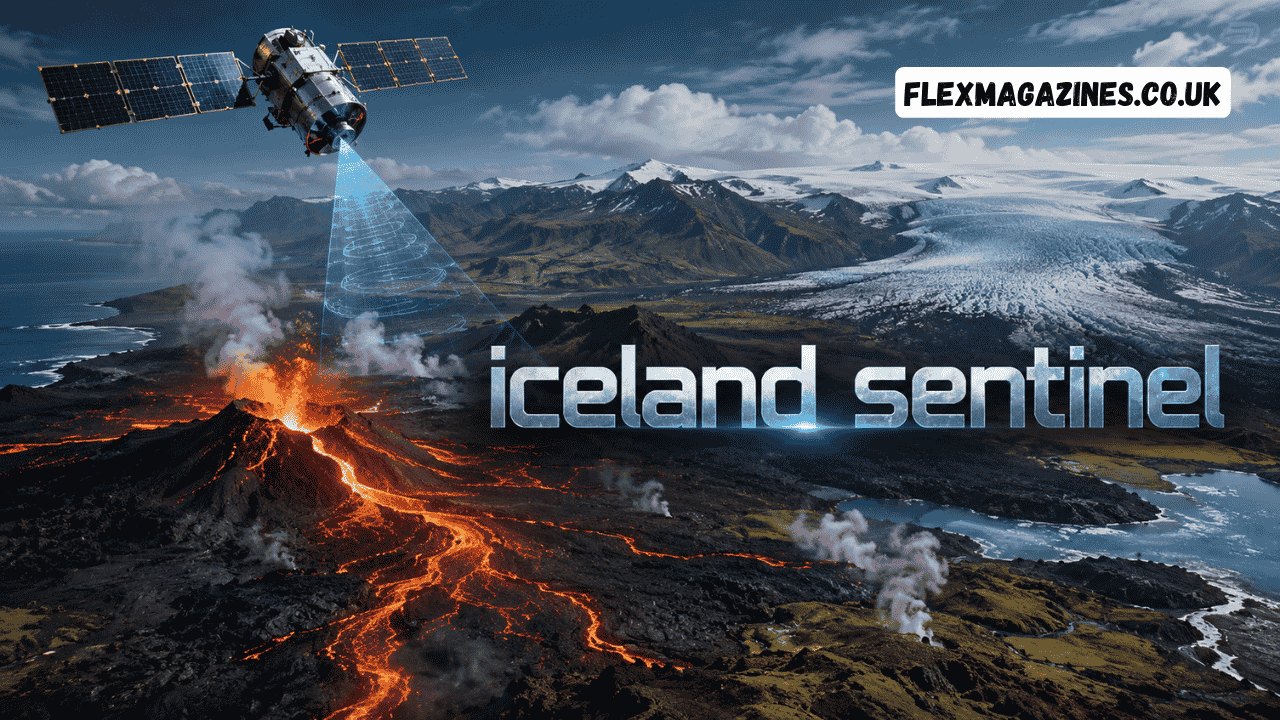
Iceland has become one of the most closely monitored regions in the world because of its volcanic activity, glaciers, and rapidly changing environment. Scientists and researchers now rely on advanced satellite systems to observe these changes from space with greater accuracy than ever before. One of the most discussed topics in Earth observation research is iceland sentinel, a term connected with the Sentinel satellite missions used for environmental monitoring across Iceland. From volcanic eruptions to glacier movement, iceland sentinel technology plays an important role in collecting valuable data that helps researchers understand natural events in real time.
The growing interest in iceland sentinel research is linked to Iceland’s unique geography. The country sits between tectonic plates, making it one of the most active volcanic regions on Earth. At the same time, Iceland contains massive glaciers, lava fields, black sand deserts, and coastal regions that constantly change due to climate conditions. Satellite imagery from Sentinel missions allows scientists to study these transformations without depending entirely on ground surveys. This combination of science, technology, and environmental monitoring has made iceland sentinel an important topic for researchers, GIS analysts, and climate experts.
Understanding the Meaning of Iceland Sentinel
The term iceland sentinel is commonly associated with the Sentinel satellite program used for observing Iceland from space. These satellites are part of the Copernicus Earth observation initiative developed to monitor environmental changes, climate patterns, and natural disasters. Sentinel satellites capture detailed images of Earth using radar systems and optical imaging technology. The collected information helps experts study landscapes that are difficult to monitor through traditional methods.
Iceland is considered an ideal location for satellite monitoring because the country experiences constant geological activity. Volcanoes erupt frequently, glaciers shift over time, and coastal areas face strong environmental pressure. The iceland sentinel approach allows researchers to track these events with updated satellite imagery. Scientists can compare old and new images to identify changes in terrain, ice coverage, and volcanic movement.
Another reason why iceland sentinel has gained attention is the availability of open-access satellite data. Researchers, students, and GIS professionals can access Sentinel imagery for educational and scientific projects. This has increased interest in remote sensing technologies and Earth observation tools around the world.
Why Iceland Is Important for Satellite Observation
Iceland offers one of the most dynamic natural environments on Earth. The country contains active volcanoes, geothermal regions, glaciers, and coastal cliffs within a relatively small area. These natural features create perfect conditions for testing satellite observation systems. Because of this, iceland sentinel studies are frequently used in environmental and geological research.
Volcanic eruptions in Iceland can affect air travel, climate patterns, and nearby communities. Satellite monitoring allows scientists to detect surface deformation before eruptions occur. Radar imaging technology used in iceland sentinel systems can measure small ground movements that may indicate rising magma beneath the surface. This early monitoring helps authorities prepare for possible volcanic events.
The climate conditions in Iceland also make the region important for glacier research. Many glaciers are shrinking due to rising temperatures, and satellite imagery helps experts measure these changes accurately. The iceland sentinel system provides repeated observations that show how ice coverage changes over time.
Some of the natural features monitored through iceland sentinel include:
- Active volcanoes and lava fields
- Glacier movement and melting patterns
- Coastal erosion and shoreline changes
- Snow coverage during seasonal shifts
- Vegetation growth and soil erosion
How Sentinel Satellites Monitor Icelandic Volcanoes
Volcanic monitoring is one of the most important uses of iceland sentinel technology. Iceland contains dozens of active volcanic systems, many of which are closely observed using satellite imagery. Sentinel-1 satellites use radar systems that can collect data even during cloudy weather or darkness. This is extremely useful in Iceland because weather conditions often limit visibility.
Satellite monitoring became especially important during volcanic activity near the Reykjanes Peninsula and Fagradalsfjall volcano. Researchers used iceland sentinel imagery to observe lava flows, ground deformation, and changes in surrounding landscapes. The collected data helped scientists understand how magma moved beneath the surface before eruptions occurred.
One major advantage of iceland sentinel monitoring is the ability to study remote areas without placing people in dangerous locations. Scientists can analyze volcanic changes from satellite images instead of relying only on field observations. This improves safety while also providing faster access to updated information.
The process of volcanic monitoring through iceland sentinel usually includes several stages:
Surface Deformation Analysis
Radar satellites measure small movements in the Earth’s surface. These movements can signal volcanic pressure building underground. Scientists compare multiple satellite images to identify patterns linked to possible eruptions.
Lava Flow Observation
After eruptions occur, satellite imagery tracks the movement of lava across surrounding areas. This helps authorities understand which regions may face future risks.
Ash Cloud Detection
Volcanic eruptions release ash clouds that can disrupt air traffic. Iceland sentinel systems help detect ash movement and estimate its spread across nearby regions.
Climate Change Research and Iceland Sentinel
Climate research has become another major reason for the popularity of iceland sentinel studies. Iceland’s glaciers respond quickly to temperature changes, making the country an important location for studying global warming. Satellite imagery provides visual evidence of shrinking glaciers and changing snow patterns.
Researchers compare satellite images collected over several years to measure ice loss. These observations help scientists estimate how climate change is affecting Iceland’s environment. The iceland sentinel program also helps monitor rivers formed by glacier meltwater. Changes in water flow often indicate environmental shifts caused by rising temperatures.
Environmental monitoring through iceland sentinel is not limited to glaciers alone. Scientists also study vegetation patterns, wetland conditions, and soil erosion using Sentinel data. Some volcanic regions in Iceland have fragile soil that can deteriorate quickly due to strong winds and climate conditions. Satellite imagery helps researchers identify areas facing environmental damage.
Important climate-related observations made using iceland sentinel include:
- Glacier retreat measurements
- Seasonal snow coverage tracking
- River and meltwater analysis
- Coastal erosion studies
- Land surface temperature monitoring
The Role of Sentinel-1 and Sentinel-2 in Iceland
Different Sentinel satellites serve different purposes in Earth observation research. The most commonly used systems in iceland sentinel studies are Sentinel-1 and Sentinel-2. Each satellite provides unique data that supports environmental analysis.
Sentinel-1 Radar Imaging
Sentinel-1 uses radar technology to collect information regardless of weather conditions. This makes it highly valuable for volcanic monitoring in Iceland. Radar systems can detect ground deformation, glacier movement, and surface changes even through clouds.
The radar imaging process is especially useful during winter months when visibility conditions become difficult. Researchers studying iceland sentinel data often depend on Sentinel-1 for continuous monitoring throughout the year.
Sentinel-2 Optical Imaging
Sentinel-2 captures high-resolution optical images of Earth’s surface. These images are useful for studying glaciers, vegetation, rivers, and lava fields. Sentinel-2 imagery provides clear visual comparisons that help researchers understand environmental changes.
Many GIS professionals working on iceland sentinel projects use Sentinel-2 imagery for mapping and landscape analysis. The satellite data supports educational research, climate studies, and environmental planning.
Iceland Sentinel in GIS and Remote Sensing Projects
The growing use of GIS technology has increased interest in iceland sentinel research. GIS stands for Geographic Information Systems, a technology used to analyze and visualize spatial data. Sentinel satellite imagery plays a major role in modern GIS projects related to Iceland.
Students and researchers often use iceland sentinel data in mapping projects because the imagery is publicly available. The data can be analyzed through GIS software to study environmental changes, volcanic landscapes, and glacier movement. Remote sensing specialists also combine Sentinel imagery with other geographic datasets to create detailed environmental models.
Common uses of iceland sentinel data in GIS projects include:
- Mapping lava fields after eruptions
- Monitoring glacier retreat over time
- Studying land cover changes
- Creating environmental risk maps
- Analyzing coastal landscape changes
The accessibility of Sentinel data has also helped educational institutions introduce students to remote sensing technologies. Many universities now use Iceland-based satellite imagery as part of geography and environmental science courses.
Future Importance of Iceland Sentinel Technology
The future of iceland sentinel research is closely connected with climate science and disaster monitoring. As environmental conditions continue to change, satellite observation systems will become even more important. Iceland’s active geological environment provides researchers with continuous opportunities to study natural processes in real time.
Future improvements in satellite technology may provide even higher-resolution images and faster data updates. This could help scientists predict volcanic activity more accurately and monitor glacier changes with greater precision. Iceland sentinel research may also support emergency planning during natural disasters.
Another growing area involves combining artificial intelligence with satellite analysis. Researchers are exploring ways to use automated systems to identify environmental changes in Sentinel imagery. This could improve the speed of volcanic monitoring and climate analysis across Iceland.
Conclusion
The growing importance of iceland sentinel research highlights the value of satellite technology in environmental monitoring and disaster observation. Iceland’s volcanoes, glaciers, and changing landscapes create one of the most active natural laboratories in the world. Sentinel satellites provide scientists with detailed information that supports volcanic monitoring, climate research, and geographic analysis.
The use of iceland sentinel systems has improved the ability to study dangerous volcanic regions safely while also helping researchers track long-term environmental changes. From glacier retreat to lava flow mapping, satellite imagery continues to transform how experts understand Iceland’s natural environment. As Earth observation technology advances, iceland sentinel research will likely become even more important for climate science, remote sensing, and environmental protection.
FAQs
What does iceland sentinel mean?
Iceland sentinel usually refers to the use of Sentinel satellite systems for monitoring Iceland’s environment, volcanoes, glaciers, and climate conditions through Earth observation technology.
Why is Iceland important for Sentinel satellite research?
Iceland contains active volcanoes, glaciers, geothermal regions, and changing landscapes, making it an ideal location for environmental and geological monitoring.
Which Sentinel satellites are mostly used in Iceland?
Sentinel-1 and Sentinel-2 are the most commonly used satellites in iceland sentinel studies because they provide radar and optical imagery for environmental analysis.
How does iceland sentinel help volcanic monitoring?
Iceland sentinel systems detect ground deformation, lava movement, and ash clouds through satellite imagery, helping scientists monitor volcanic activity safely and accurately.
Can students use iceland sentinel data for research projects?
Yes, Sentinel satellite data is publicly available and widely used in GIS, geography, climate science, and remote sensing projects for educational and research purposes.